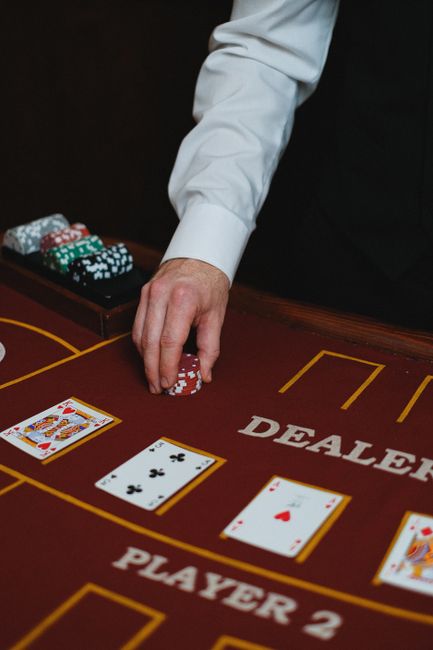
Ask ten casino players what separates a winning session from a losing one and you'll get ten different answers. Some swear by hot streaks. Others talk about gut feelings. A few will quietly admit they just enjoy the ride. But spend enough time around slots, poker tables, and sportsbooks and a more honest picture emerges: every game in the iGaming world sits somewhere on a spectrum between pure chance and genuine skill. Knowing where a game falls on that spectrum is the single most useful piece of knowledge you can carry into it.
Most players never think about this. They treat a poker hand and a slot spin as roughly the same kind of gamble, just with different buttons. That's a costly assumption. The decisions you make in one format compound over hours and thousands of hands; in the other, they barely matter at all. Let's break down what's actually going on.
Slots are the most popular product in iGaming for a simple reason: they ask almost nothing of you. Pull the lever, press the button, watch the reels. The only real decision is how much to bet per spin and when to stop.
Modern video slots run on Random Number Generators, which means every spin is independent of the last. A machine that hasn't paid out in an hour is no more likely to hit than one that just paid. This is called the gambler's fallacy, and it's the reason so many players chase losses on slots that "must be due." They aren't due. They're random.
The number that actually matters on any slot is the RTP, or Return to Player. A slot with 96% RTP returns, on average, 96 cents for every dollar wagered over millions of spins. The remaining 4% is the house edge. Here's the catch: that 96% is a long-run average. In any single session, your personal return could be 0% or 5,000%. RTP tells you nothing about what will happen tonight.
Now switch to poker, and the entire equation flips. Yes, you get dealt random cards. Yes, a bad beat can gut you on the river. But over thousands of hands, the players who consistently win are the ones making better decisions, not the ones getting luckier. A good place to continue is slot dana.
This is why poker is the one major iGaming vertical where long-term winning players genuinely exist. In slots, the house always wins eventually. In poker, you're not playing the house, you're playing other people. The house just takes a rake from the pot and walks away.
What separates a winning poker player from a break-even one? A few things:
A strong player can beat a weak field at 5 to 10 big blinds per 100 hands. That's a wage. A slot player cannot do anything equivalent.
Between pure luck and pure skill, you have games that blend both. Sports betting rewards research, line-shopping, and understanding how bookmakers set odds. But even the sharpest bettor loses 40% to 45% of individual bets and still profits over a season. Variance is enormous.
Blackjack is another hybrid. Basic strategy, the mathematically optimal way to play every hand, can shrink the house edge to around 0.5%. Card counting in live games can flip the edge in your favour, though online blackjack makes this essentially impossible because the shoe is reshuffled constantly. Still, a blackjack player who knows basic strategy loses significantly less per hour than one guessing at every decision, and that gap is meaningful over a year of play.
If you're going to sit at a blackjack table, learn basic strategy. It takes an afternoon. The difference between playing by instinct and playing by the chart is roughly 2% of every dollar you wager, which on $10,000 of play is $200. Pure maths.
That depends entirely on what you want from iGaming. There's no wrong answer, but there is a wrong fit.
The most dangerous mindset in iGaming is believing you've found a system. Slot players who think certain machines are "hot." Sports bettors who think their model can't lose. Poker players on a heater who suddenly start playing stakes they aren't rolled for. Every one of these stories ends the same way.
The truth is boring and liberating: in games of chance, you cannot control outcomes, only exposure. In games of skill, you can control outcomes slightly, but only over enormous sample sizes, and only if you're actually better than the field. Confusing the two is how bankrolls disappear.
Here's a simple check. Before you deposit, ask yourself whether your decisions in the next hour will have any measurable effect on your expected return. If the answer is no (slots, most casino games), treat that money as an entertainment expense, not an investment. If the answer is yes (poker, sharp sports betting), treat it like a project that requires study, tracking, and ruthless honesty about results.
iGaming is a mature industry that offers genuine entertainment and, in a few corners, genuine opportunity. But it doesn't hand either one to you. You have to know which game you're playing, and why. The players who understand that distinction don't just lose less. They enjoy it more, because they stop expecting randomness to reward them and start respecting what each game actually rewards.